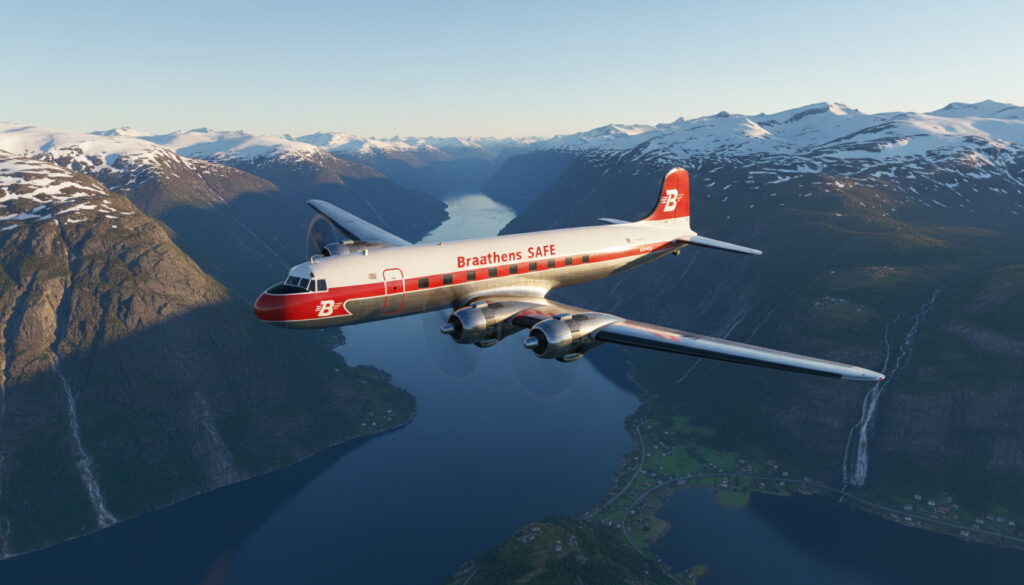
Braathens International Airways – Norjalaisen Lentoyhtiön Historia
The Launch of Long-Haul Operations
Braathens International Airways commenced operations in 1996 as the intercontinental division of Norway’s established domestic carrier. The subsidiary emerged from Braathens ASA’s strategic decision to extend its reach beyond European routes, utilizing Boeing 767 wide-body aircraft to connect Oslo with destinations in North America and Southeast Asia. This expansion represented the carrier’s first significant return to long-haul markets since the 1950s, when Braathens operated early international services with Douglas DC-4 aircraft.
Operations at a Glance
- Founded:
- Ceased operations:
- Parent company: Braathens ASA
- Hub: Oslo Fornebu Airport (transferred to Gardermoen in 1998)
- Fleet: 3 Boeing 767 aircraft
- Primary destinations: Bangkok, Orlando, Newark
Strategic Insights
The airline targeted dual market segments simultaneously: leisure travelers seeking direct flights to holiday destinations and business passengers requiring transatlantic connectivity. Operating from Oslo Airport, Braathens International Airways competed against established Scandinavian carriers with decades of intercontinental experience. The venture faced immediate pressure from seasonal demand fluctuations, with winter load factors dropping significantly on North American routes while Asian services maintained steadier traffic throughout the year.
Fleet Composition
| Aircraft Type | Registration | Entry into Service | Configuration | Notes |
|---|---|---|---|---|
| Boeing 767-200ER | LN-RCB | 1996 | 214 seats (24 business/190 economy) | Previously operated by Braathens |
| Boeing 767-200ER | LN-BR | 1997 | 214 seats | Leased from lessor pools |
| Boeing 767-300ER | LN-BRA | 2000 | 262 seats | Stretched variant for high-density routes |
Operational Details
The carrier operated with a two-class configuration featuring business and economy cabins. Flight schedules emphasized overnight departures from Oslo to maximize aircraft utilization, with morning arrivals at destination airports facilitating same-day connections. Ground handling agreements at hub airports relied on third-party providers rather than proprietary infrastructure, reducing fixed costs but occasionally compromising service consistency during peak seasons.
Historical Timeline
- : Braathens International Airways established with initial Boeing 767-200ER acquisition
- : Inaugural service to Bangkok Suvarnabhumi Airport
- : Orlando Sanford International flights commence, targeting Norwegian leisure markets
- : Operations transfer from Fornebu to new Gardermoen airport
- : Newark Liberty International service launched, competing directly with SAS on New York routes
- : Final long-haul flight operates from Bangkok to Oslo
- : Aircraft transferred to other operators, division formally dissolved
Market Context
The decision to terminate intercontinental operations reflected broader shifts in European aviation economics. Rising fuel costs, combined with reduced corporate travel budgets following the early 2000s economic downturn, eroded yield premiums on transatlantic routes. The airline’s limited fleet size prevented the economies of scale enjoyed by larger competitors, while its hybrid scheduling—attempting to serve both charter and scheduled markets—created revenue management complexities that proved difficult to resolve.
Competitive Analysis
Against SAS and emerging low-cost carriers, Braathens International Airways maintained advantages in direct routing but struggled with frequency. While competitors offered daily departures to major hubs, the Norwegian carrier’s three-aircraft fleet limited Bangkok services to thrice-weekly operations during off-peak months. This schedule disparity particularly affected business travelers, who gravitated toward competitors’ more flexible itineraries despite Braathens’ competitive pricing on fully flexible fares.
Industry Perspectives
The withdrawal from long-haul markets demonstrated the difficulty of sustaining intercontinental operations with sub-scale fleets. Braathens International Airways operated efficiently given its constraints, but the underlying economics of wide-body ownership favor either large network carriers or dedicated charter operators with distinct cost structures.
Scandinavian Aviation Review, 2002
Scandinavian Aviation Review, 2002, tarjoaa syvempää analyysiä aiheesta, ja voit lukea lisää Braathens International Airwaysin historiasta täältä: suomenlehti.fi – Aiheeseen liittyva analyysi.
Summary
Braathens International Airways operated for six years, connecting Norway with intercontinental destinations during a volatile period for the airline industry. The division’s closure in 2002 preceded the eventual merger of Braathens ASA with SAS Norge in 2004, effectively ending independent long-haul competition from Norwegian-flagged carriers until the emergence of new low-cost long-haul operators a decade later. The Boeing 767 aircraft previously operated by the airline subsequently entered service with various European and Asian carriers, continuing operations under different registries for another fifteen years.
Frequently Asked Questions
Why did Braathens International Airways cease operations?
The airline closed its long-haul division in March 2002 due to unsustainable economics. High operating costs associated with the small three-aircraft fleet, combined with declining yields following the post-2001 travel industry downturn, made the intercontinental routes unprofitable. Parent company Braathens ASA refocused resources on its profitable domestic and European short-haul network.
Which destinations did the airline serve?
Braathens International Airways operated scheduled services to Bangkok in Thailand, Orlando Sanford in Florida, and Newark Liberty International Airport serving the New York metropolitan area. The Bangkok route operated year-round, while North American services followed seasonal demand patterns with increased frequencies during summer months.
What happened to the aircraft after the airline closed?
The Boeing 767 fleet was sold or returned to lessors following the March 2002 closure. The -200ER aircraft found subsequent employment with various charter operators across Europe, while the -300ER model entered service with an Asian carrier. All three aircraft remained in commercial passenger service for approximately fifteen additional years before transition to cargo conversion or retirement.
Lisaa liittyvia artikkeleita
 Sevilla – Barcelona: tilastot, historia ja lipunmyynti
 Monster High Draculaura – G3-hahmon tausta ja edustus
 Sää Iso Syöte – 15 vrk ennuste, lumitilanne ja webkamerat
 Mikä on sosiaalinen insinöörihyökkäys? Esimerkit ja tyypit
 Beavis ja Butt-Head – ikäraja ja striimaus Suomessa
 Pokémon-tyyppitaulukko: heikkoudet, kestävyydet ja kaksoistyypit
 ASUS BIOS -päivitys: opas, riskit ja vaiheittaiset ohjeet
 Hannu-Pekka Björkman – Puoliso Nina Honkanen, perhe ja ura